The Pakistan Army has criticized recent remarks by Indian military officers and political leaders, warning that a future conflict between the two countries could lead to "cataclysmic devastation." The statement follows comments from Indian officials regarding India's ability to cross borders and the potential for military action against Pakistan.
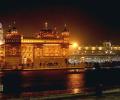
The Army on Monday showcased a demonstration of how Indian Air Defence systems, including AKASH missile system, L-70 Air Defence Guns, saved the Golden Temple in Amritsar and cities of Punjab from Pakistani missile and drone attacks.
Vice Admiral K Swaminathan highlights concerns over Pakistan's arms procurement and China's growing assertiveness in the Indian Ocean Region.

Notably, Siachen is the highest battlefield of the world, which sits on the nuclear tri-junction of India, Pakistan and China.
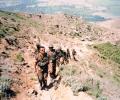
'5465 was over 17,000 feet -- our eyes were out of the sockets by the time we got to the top.' 'We had not eaten in 2-3 days and climbed in extremely difficult terrain.' 'I was there for 5-6 days, but had to be evacuated because I started vomiting blood.'
'Indian Army officers always lead their men into battle or combat. Pakistani officers are seldom seen at the front.'
'China's basic purpose of taking the Shaksgam Valley was access to the Indian Ocean.'
On President Putin's two-day trip to India, Jaishankar said for a "big" and "rising" country like India, it is important to maintain good cooperation with as many important players as possible in the world in line with freedom of choice.

Pakistan announced a 48-hour ceasefire with Afghanistan following deadly border clashes. The agreement aims to facilitate dialogue and find a resolution to the conflict.

The Indian military also acknowledged suffering some losses but declined to provide the details as the operations are going on.

Union Home Minister Amit Shah on Friday said the victory of the Bharatiya Janata Party-led National Democratic Alliance in the Bihar polls was a mandate against infiltrators in the country because citizens will never favour those parties that support such illegal immigrants.

Whether Freedom At Midnight 2 has a political agenda, a bias or two will be read into it, depending on the affiliation of who is watching, notes Deepa Gahlot.
Records stretching back to 1947 suggest a consistent strategy by Pakistan's military and intelligence apparatus, the Inter Services Intelligence (ISI), of using terrorism as a state policy against India.

'Should China's interest in the Teesta River projects be approved, it would likely result in heightened Chinese presence near the Siliguri corridor.'

Official confirmation from the government is still awaited, and more details are expected soon.

"We did not bathe or shave for three months and on several occasions quenched our thirst by eating ice," recalled braveheart Naik Praveen on the 26th anniversary of Kargil Vijay Diwas Saturday.

A senior government official confirmed that after a meeting with other stakeholders, the decision has been taken and airlines and airport authorities have been informed about it.

While Asim Malik's role in Pakistan's recent warming up of relations with the US is acknowledged, army watchers note a recent distancing, what with Asim Munir not wanting his DG, ISI to share the limelight during his subsequent sojourns to Tampa and Brussels, points out Rana Banerji, who headed the Pakistan desk at RA&W.
'We completely destroyed at least three posts, an ammunition depot, fuel storage facility, and gunnery, among other targets. Our retaliation was so devastating that it will take Pakistan at least 8-12 months to rebuild, possibly longer'
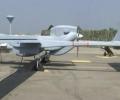
The sources declined to specify the number of drones the Navy plans to acquire but said the focus is now on manufacturing the MK-II in India through partnerships with Hindustan Aeronautics Limited (HAL) and Elcom.
United States President Donald Trump will host Pakistan Army chief Asim Munir for lunch at the White House on Wednesday.

In the movie, veteran star Sanjay Dutt portrays Chaudhary Aslam. The police officer was assassinated by Pakistan Tehreek-e-Taliban's Mohmand chapter who claimed responsibility for carrying out a bomb attack on his car on the Lyari Expressway on January 9, 2014, in which two other police officers, his driver, and guard were also killed.

Major Syed Moiz Abbas Shah, 37, was killed on Tuesday in a clash with the Taliban militants in the Sararogha area of South Waziristan near the Afghan border, according to a statement by the Inter-Services Public Relations (ISPR), the media wing of the army.

'Pakistan has found itself in a favourable position after Operation Sindoor by appreciating the mediation as claimed by Trump and recommending him for the Nobel Peace Prize.'
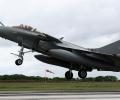
The western media is going all out to prove that India suffered a major setback in Operation Sindoor and how China helped shoot down Indian fighter jets. One of the articles published in British newspaper Telegraph stated Operation Sindoor shattered the myth of India's air dominance over Pakistan. "The Pakistani Air Force, aided by Chinese targeting satellites and AWACS executed a sensor-fusion kill. The Rafales never got a lock, never even saw their adversary. When the missiles hit, it was already over," wrote the British Newspaper, The Telegraph.

10 Heroes of the 1965 War which ended on September 23 60 years ago.

'All the anti-India groups like LeT, Jaish-e-Mohammad, Hizb-ul Mujahideen have been activated with terrorist camps and launching pads in place.'

'They thought nobody would hit Bahawalpur and Muridke because they have nuclear weapons.' 'They used to think India cannot touch our military targets because we are a nuclear weapons country.' 'After Operation Sindoor we have called their bluff.'

In his speech, General Munir highlighted the role of the army in defending the motherland with the support of the people of Pakistan and also touched upon various conflicts with India, including the Kargil War.
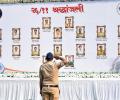
'They came to our bedrooms, woke people who were sleeping, and shot them. For what? For what?'

India's recent missile strikes on nine terrorist locations in Pakistan and Pakistan-occupied Kashmir (PoK), including Bahawalpur, mark a significant escalation in the long-standing military tensions between the two nations. This article provides a historical overview of the Indo-Pak military confrontations, tracing their roots back to the 1947 war following India's independence and the partition of the sub-continent, and highlighting key conflicts such as the 1965 war, the 1971 Bangladesh Liberation War, the 1999 Kargil War, the 2016 Uri attack, and the 2019 Pulwama attack.
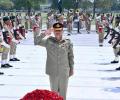
India had better be prepared. Munir could be back at our throats soon, even within the next 12 months, warns Shekhar Gupta.

'An important consideration was that we should always be at the top of the escalation ladder. When we reach a military objective, we should try and put a stop to it'

In a post on X, the additional directorate general of public information posted: "Pakistan again violates the Ceasefire Agreement by firing artillery in Bhimber Gali in the Poonch-Rajouri area. Indian Army is responding appropriately in a calibrated manner."
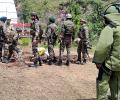
The officials said dozens of unexploded explosives were destroyed by the experts along the Line of Control in Rajouri and Poonch districts and along the International Border in Jammu and Samba which witnessed intense cross-border shelling and drone attacks from May 7 to May 10.

The textbooks also removed the title 'Father of the Nation' for Mujibur Rahman.
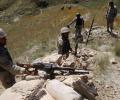
Pakistan and Afghanistan have agreed to an immediate ceasefire and setting up of 'mechanisms' to ensure lasting peace after days of violent clashes along the border that left several soldiers, civilians, and terrorists dead on both sides, officials said on Sunday.

'Nor would it have serious implications in India's relations with Saudi Arabia that stand on their own and have improved significantly in recent times, including in defence and strategic affairs.'
'There's something called deterrence by punishment.' 'That means you hit in a manner calculated to raise costs and consequences for Pakistan, so that the next time it attempts a Pahalgam-like attack, it has to think ten times.'

The retaliation also comes after an Indian Army solider was killed in Pakistan firing along the LoC in Jammu and Kashmir's Rajouri district on last Saturday.
 © 2026 Rediff.com - Advertise with us - Disclaimer - Privacy Policy - Sitemap - Feedback - About us - Terms of use - Grievances